The fibre
Silk vs satin pillowcases: what is the difference?
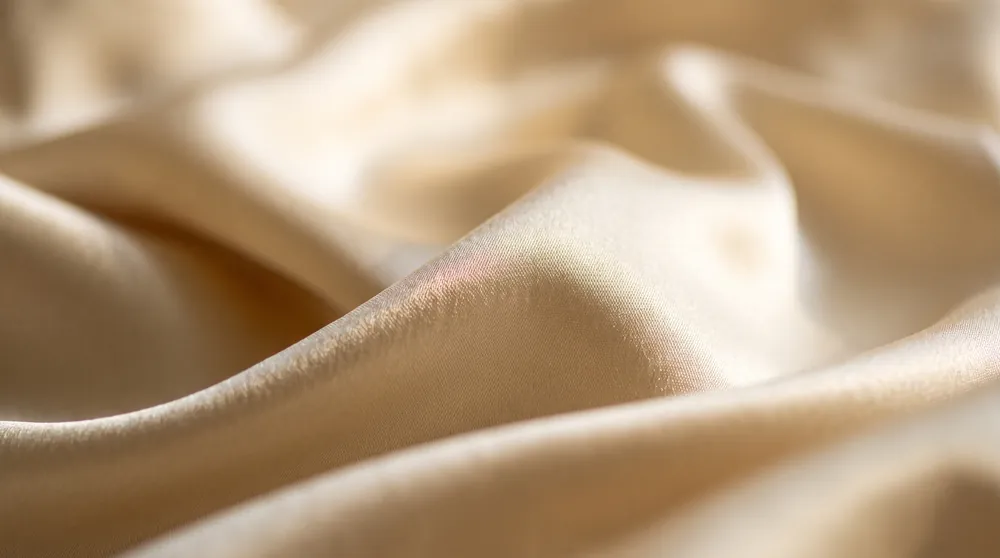
Satin is a weave. Silk is a fibre. Most of the confusion goes once you know that. A satin pillowcase can be woven from silk, but most low-cost satin pillowcases are polyester. So the choice in front of you is usually silk or polyester satin, and the two have more in common than the marketing on either side suggests.
Is satin the same as silk?
No. Satin describes how the threads are woven, not what they are made of. In a satin weave the threads on the face float over several cross threads at a time. That gives a glossy, smooth face and a duller back.
Charmeuse is a satin weave too. It can be woven from silk, polyester or rayon, so "charmeuse" on its own does not tell you the fibre either.
Silk is the fibre. Mulberry silk comes from silkworms fed on mulberry leaves. Each cocoon is reeled as one continuous filament, so there are no short fibre ends on the surface. Short-fibre "spun" silk is made more like cotton yarn.
The weave does a lot of the work. A face of long, smooth floats is built to be slippery, and polyester satin and cotton sateen use the same idea. Silk charmeuse and polyester satin are both smooth filament fabrics. The difference is the fibre.
What are the real differences between silk and satin?
Set aside the claims nobody has tested and two differences are left that you can check.
- What it is made of. Silk is a natural protein fibre, made mostly of fibroin. Raw silk also carries sericin, the gum that holds the strands together, which makes up about 25 to 30% of its protein. It is washed out in degumming, before smooth silk fabric is woven. Polyester is made from fossil fuels.
- How much moisture it holds. In standard conditions, 21°C and 65% humidity, silk takes up about 11% of its weight in moisture from the air. Polyester takes up 0.4 to 0.8%. That is standard textile data, and it is the clearest measured gap between the two.
Be clear about what that moisture figure does not tell you. Nobody has tested whether it changes anything for your skin overnight. We found no study of skin hydration on people sleeping on silk, and no independent test of how much night cream a silk pillowcase takes up. It describes the fibre. It is not a promise about your face.
You may also read that silk absorbs less moisture than cotton. On moisture from the air, it does not. Cotton takes up 7 to 11%, so silk holds as much or a little more. Our science page has the full moisture figures.
Is silk or satin better for your hair?
This is usually the real question, and the guidance is even-handed. The British Association of Dermatologists, in its 2023 leaflet on caring for Afro-textured hair, suggests a satin or silk pillowcase for minimising friction. The American Academy of Dermatology's curly hair tips say much the same of satin or silk bonnets and pillowcases.
Both say satin or silk. Neither puts one above the other, and neither endorses a brand. No independent study shows silk beats satin for hair or skin either. So if a smooth surface for your hair is what you want, satin is a fair choice on the evidence we have, and we would rather say so than pretend otherwise.
We look at that guidance more closely in do silk pillowcases help curly hair?
Why choose silk over satin, then?
Because of what it is and how it feels. Silk is a natural fibre, spun by silkworms that feed on mulberry leaves. It is light and smooth, and it holds far more moisture from the air than polyester satin. If you would rather sleep on a natural fibre, and you love how it feels, that is reason enough.
It does ask for gentle care. Strong alkaline detergents weaken silk, and sunlight fades it. Wash it cool with a pH-neutral detergent that has no enzymes or bleach, skip the tumble dryer, and dry it out of direct sun. Whatever your pillowcase is made of, wash it every week.
One thing we won't do is call silk the green choice. Polyester is made from fossil fuels, but silk is not light on resources either. A University of Oxford life cycle study of Indian silk found its impacts per kilo were above those reported for other natural fibres, with most coming from cocoon production. The honest picture is mixed.
How can you tell silk from satin when you buy?
Read the fibre content, not the name. "Satin" and "charmeuse" tell you the weave. "100% mulberry silk" tells you the fibre. "Silky" tells you nothing at all.
On a silk listing, look for the momme. It is a weight: 1 momme is 4.34 grams per square metre, so 22 momme is about 95.5 g of silk in every square metre. Higher momme means a denser fabric. It is not a grade of quality on its own, and no study shows one momme is better for hair or skin.
Two other labels are worth understanding. Grade 6A rates the raw silk yarn, not the finished pillowcase. OEKO-TEX Standard 100 means the textile was tested for harmful substances, and a real certificate has a number you can check on the OEKO-TEX site. It is not an organic or environmental label. Our science page covers momme, grade and OEKO-TEX in more detail.
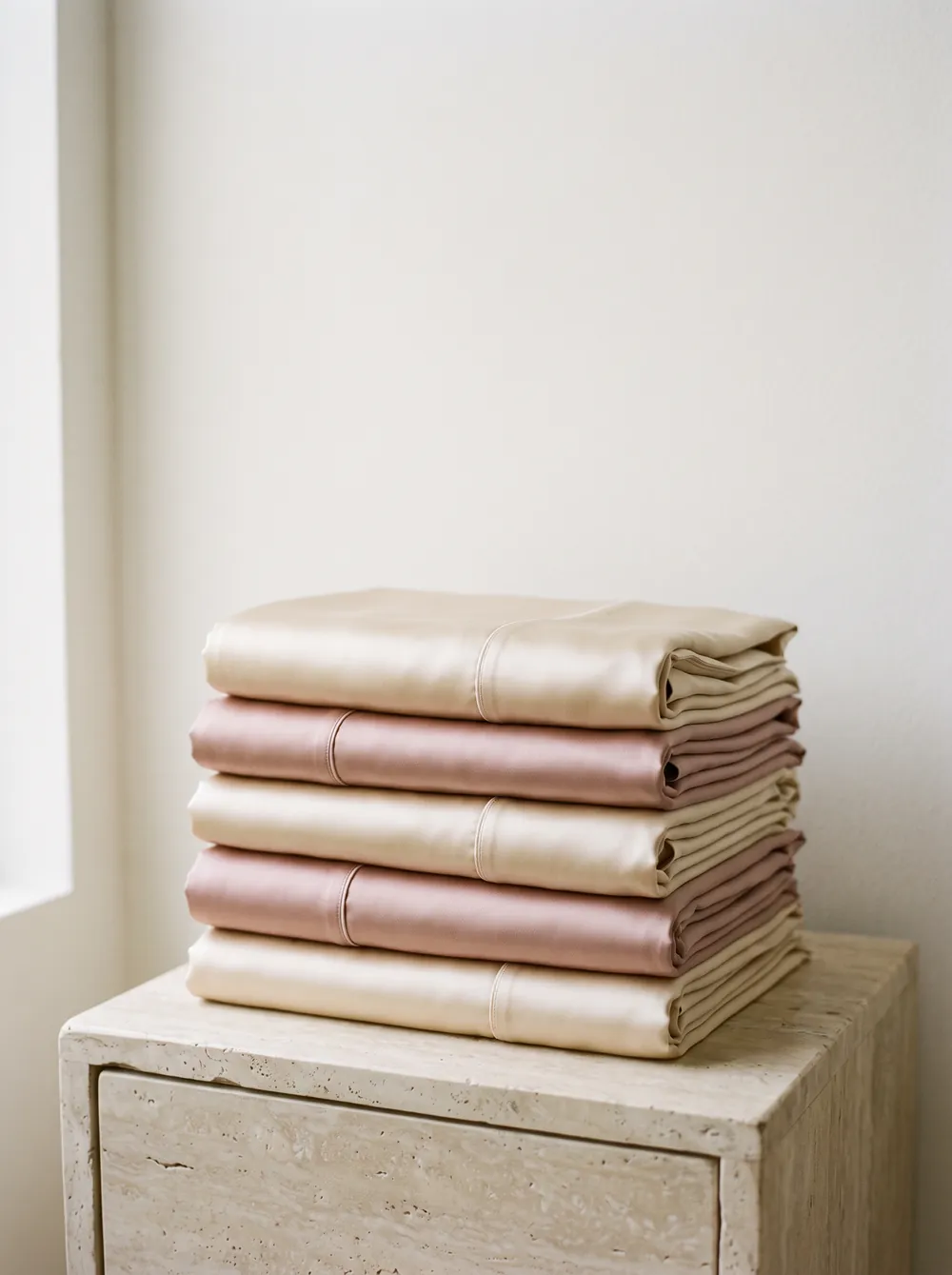
SOIEA is 100% mulberry silk at 22 momme, in champagne and blush. It launches in December 2026 and ships to the UK and Ireland. See the pillowcase.
Questions people ask
Not always. Charmeuse is a satin weave with a glossy face and a dull back, and it can be woven from silk, polyester or rayon. The fibre content on the label tells you which.
No study shows that. UK and US dermatology guidance for curly and Afro-textured hair suggests sleeping on silk or satin to cut overnight friction, and neither body says silk beats satin.
Not moisture from the air. In standard conditions silk takes up about 11% of its weight and cotton 7 to 11%, so silk holds as much or a little more. Polyester takes up 0.4 to 0.8%.
We don't claim it is. Polyester is made from fossil fuels. Silk is a natural fibre, but a University of Oxford life cycle study of Indian silk found its impacts per kilo were above those reported for other natural fibres.
Sources
- MFA CAMEO, Charmeuse
- Coats, Know about textile fibres
- Aad R, Dragojlov I, Vesentini S. Sericin protein: structure, properties, and applications. J Funct Biomater, 2024
- Zhu L et al. Recent advances in environmentally friendly and green degumming processes of silk. Polymers, 2022
- British Association of Dermatologists, Caring for Afro-textured hair, July 2023
- American Academy of Dermatology, 6 curly hair tips from dermatologists, 30 June 2022
- Store norske leksikon, Momme
- Niu J, Hu Q, Xu J. Correlation between indicators of the electronic testing and the current test for raw silk. Advances in Engineering Research, 2017
- OEKO-TEX, STANDARD 100
- Astudillo MF, Thalwitz G, Vollrath F. Life cycle assessment of Indian silk. J Clean Prod, 2014
- Ohio State University extension, Silk fabric care fact sheet
Every claim here is checked against the published sources above and our graded evidence page. We don't make claims the evidence doesn't support.
Keep reading
The fibre
Does silk absorb less moisture than cotton? The 11% figure explained
Not from the air. In standard conditions silk takes up about 11% of its weight in moisture from the air, and cotton 7 to 11%, so silk holds as much or a little more. It holds far more than polyester satin, at 0.4 to 0.8%. No study has tested what this means for your skin overnight.
· 4 min read

Hair
Do silk pillowcases help curly hair? What dermatologists actually say
UK and US dermatology guidance for curly and Afro-textured hair suggests sleeping on silk or satin to cut overnight friction, and the AAD adds it may help preserve your style. That is expert advice, not a trial result. No study has tested a silk pillowcase on hair, and the guidance names satin and silk equally.
· 4 min read
Buying guide
What does momme mean? 19, 22 and 25 momme explained
Momme is a weight. One momme is 4.34 grams per square metre, so 19 momme silk is about 82.5 g/m², 22 momme about 95.5 g/m² and 25 momme about 108.5 g/m². A higher momme means more silk and a denser, heavier fabric. It is not a grade of quality.
· 3 min read
Be first to sleep on it.
22 momme mulberry silk, launching December 2026. Shipping to the UK and Ireland.
Join the pre-order list