Skin
Do silk pillowcases stop wrinkles? An honest look at sleep lines
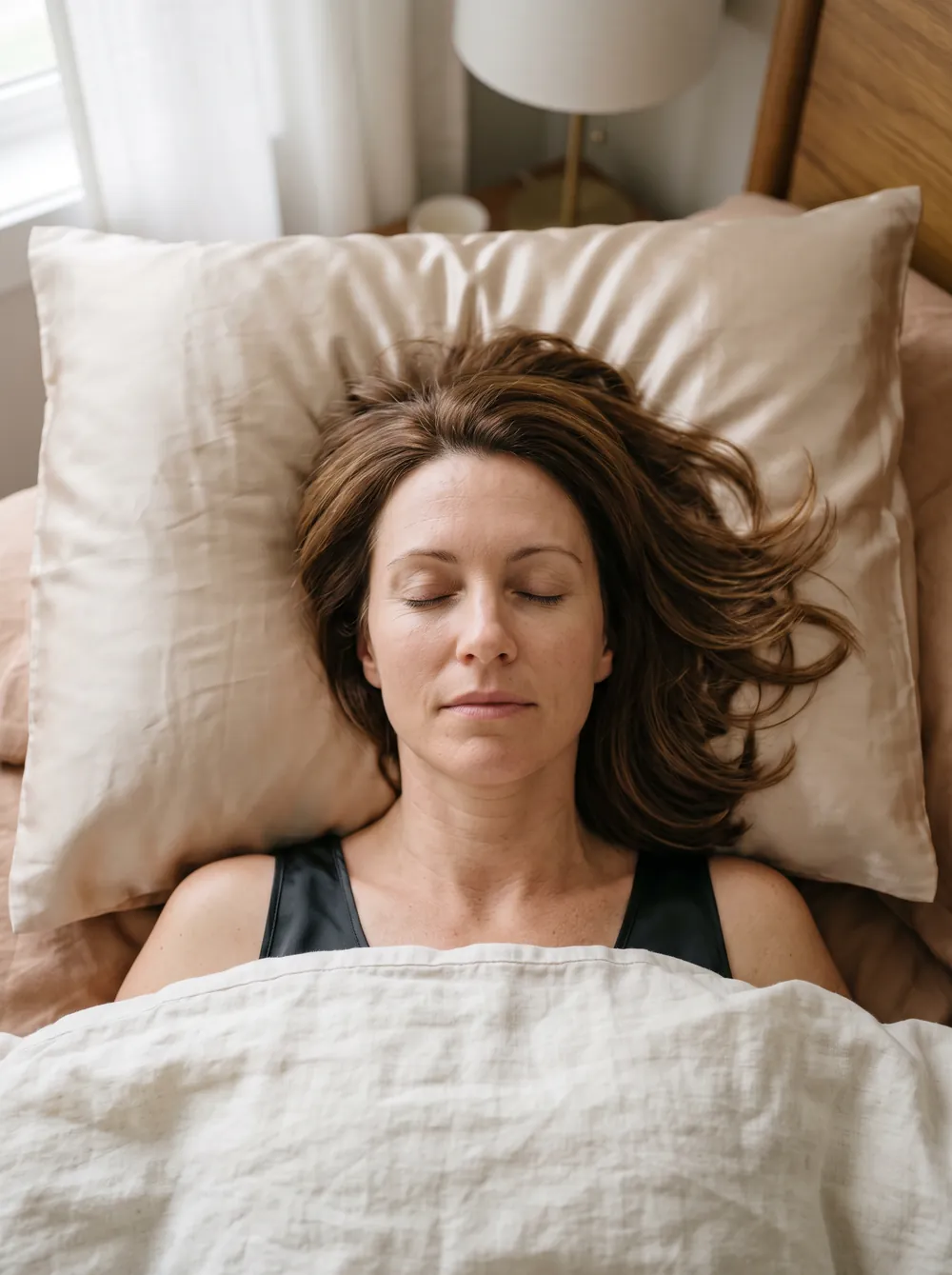
No study shows that a silk pillowcase prevents or reduces wrinkles. You may have read that it does. We will not say it. What researchers have looked at is sleep lines, the creases that form where your face presses into the pillow. Here is what is known about them, and what is not.
Do silk pillowcases prevent wrinkles?
There is no peer-reviewed study of a mulberry silk pillowcase on wrinkles. When the research for our science page went through the medical databases, trial registries and journals, it found none. There is no such study on hair, acne or skin moisture either.
You may see a brand quote its own study of women who moved to silk from cotton or synthetic satin. The one we read about was not published and described no control group. UK advertising rules say beauty claims need evidence from trials on people, held before the claim is made, and a customer survey is not enough on its own. An unpublished brand test does not meet that bar, so we do not borrow one.
What causes sleep lines?
Sleep lines are creases that form where the face is pressed and folded against the pillow. They were first described in people who sleep on their front. A 2016 review in the Aesthetic Surgery Journal argued that they differ from the lines made by facial expression, in what causes them, where they sit and the pattern they follow. It put them down to pressure, sideways pull and strain on the face during side and front sleeping.
Another team used a see-through air pillow to watch how the face changes shape when it is pressed into a pillow, then designed a pillow to move that pressure away from the face.
Notice what none of this work tested: fabric. The 2016 review says nothing about silk. If you see it cited as proof that silk works on wrinkles, it is not.
Does sleep position matter more than the pillowcase?
That is where the evidence points. Pressure is the main force behind sleep lines, and a pillowcase does not change pressure. Silk, cotton or anything else, your face rests on the pillow with the same weight behind it. Sleeping on your back helps most, because your face is not pressed into the pillow.
It is not quite that simple, and we would rather say so. One study compared the side each woman slept on with the side of her face that showed more wrinkles and sagging, and found no link. Another, of French women, found sleep lines were strongly linked to age and to variants of a gene called MC1R. Some researchers now argue that sleep lines involve more than mechanics alone. So pressure matters, but it is not the whole story, and some of the story is out of your hands.
Does a smoother fabric make a difference?
This is usually where the silk argument goes. The idea is that a slippery surface lets your face glide rather than drag, so the skin is pulled less. It is an idea, not a finding. Nobody has measured it on faces.
The nearest evidence does not help it. The one independent peer-reviewed comparison of silk and cotton against skin, from the University of Coimbra, found silk no lower in friction than cotton. The silk in that test may not have been a pillowcase weave, but it is the best evidence there is.
So the fabric has not been shown to change the pressure on your face or the pull on it. That is why our science page lists wrinkles under the claims we don't make.
So why sleep on silk at all?
Choose silk because you love how it feels. That is reason enough. Silk gives your face a smooth, soft surface to rest on. It is a natural protein fibre, made mostly of fibroin, and mulberry silk is reeled as one continuous filament, so there are no short fibre ends on the surface.
If you have curly or textured hair, there is a little more to say. UK and US dermatology guidance for curly and Afro-textured hair suggests sleeping on silk or satin to cut overnight friction. That guidance is about hair, not skin. It says satin or silk, and neither body endorses a brand. We look at it in our post on curly hair.
Whatever your pillowcase is made of, wash it every week. And if you are comparing silk, our guide to momme explains what the weight on the label means.
Our mulberry silk pillowcase is 22 momme, 100% mulberry silk, in champagne and blush, launching in December 2026 for the UK and Ireland. We will sell it on how it feels and what it is, never on a promise about wrinkles.
Questions people ask
Sleeping on your back helps most. Sleep lines come from your face pressing into the pillow when you sleep on your side or front. That advice rests on how the lines form, not on a trial.
Researchers describe them as different. A 2016 review in the Aesthetic Surgery Journal argued that sleep lines differ in cause, location and pattern, and come from pressure and pull on the face during side and front sleeping.
That has not been shown. The one independent peer-reviewed comparison of silk and cotton against skin found silk no lower in friction than cotton, and nobody has measured it on sleeping faces.
Pressure is only part of it. A study of French women found sleep lines were strongly linked to age and to variants of the MC1R gene, and some researchers argue sleep lines involve more than mechanics alone.
Because they have not been shown. UK advertising rules say beauty claims need evidence from trials on people before they are made, and no published study has tested a silk pillowcase on wrinkles.
Sources
- Anson G, Kane MA, Lambros V. Sleep wrinkles: facial aging and facial distortion during sleep. Aesthetic Surgery Journal, 2016
- Sarifakioğlu N, Terzioğlu A, Ates L, Aslan G. A new phenomenon: "sleep lines" on the face. Scand J Plast Reconstr Surg Hand Surg, 2004
- Poljsak B, Godic A, Lampe T, Dahmane R. The influence of the sleeping on the formation of facial wrinkles. J Cosmet Laser Ther, 2012
- Kotlus BS. Effect of sleep position on perceived facial aging. Dermatol Surg, 2013
- Jdid R, Ezzedine K, Latreille J, et al. MC1R major variants are a risk factor of sleep lines in Caucasian women. J Eur Acad Dermatol Venereol, 2014
- Xerfan EMS, Facina AS, Tomimori J, Tufik S, Andersen ML. Sleep lines on the skin: an overview of possible causes beyond a purely mechanical etiology. Int J Dermatol, 2022
- Ramalho A, Szekeres P, Fernandes E. Friction and tactile perception of textile fabrics. Tribology International, 2013
- ASA and CAP, Substantiation for health, beauty and slimming claims
- British Association of Dermatologists, Caring for Afro-textured hair, July 2023
- American Academy of Dermatology, 6 curly hair tips from dermatologists, 30 June 2022
Every claim here is checked against the published sources above and our graded evidence page. We don't make claims the evidence doesn't support.
Keep reading
The fibre
Does silk absorb less moisture than cotton? The 11% figure explained
Not from the air. In standard conditions silk takes up about 11% of its weight in moisture from the air, and cotton 7 to 11%, so silk holds as much or a little more. It holds far more than polyester satin, at 0.4 to 0.8%. No study has tested what this means for your skin overnight.
· 4 min read

Hair
Do silk pillowcases help curly hair? What dermatologists actually say
UK and US dermatology guidance for curly and Afro-textured hair suggests sleeping on silk or satin to cut overnight friction, and the AAD adds it may help preserve your style. That is expert advice, not a trial result. No study has tested a silk pillowcase on hair, and the guidance names satin and silk equally.
· 4 min read
The fibre
Silk vs satin pillowcases: what is the difference?
Satin is a weave, not a fibre. It can be woven from silk, but most low-cost satin pillowcases are polyester. Both are smooth, and dermatology guidance for curly hair says satin or silk, not one over the other. The clearest measured difference is moisture: silk takes up about 11% of its weight from the air, polyester under 1%.
· 4 min read
Be first to sleep on it.
22 momme mulberry silk, launching December 2026. Shipping to the UK and Ireland.
Join the pre-order list